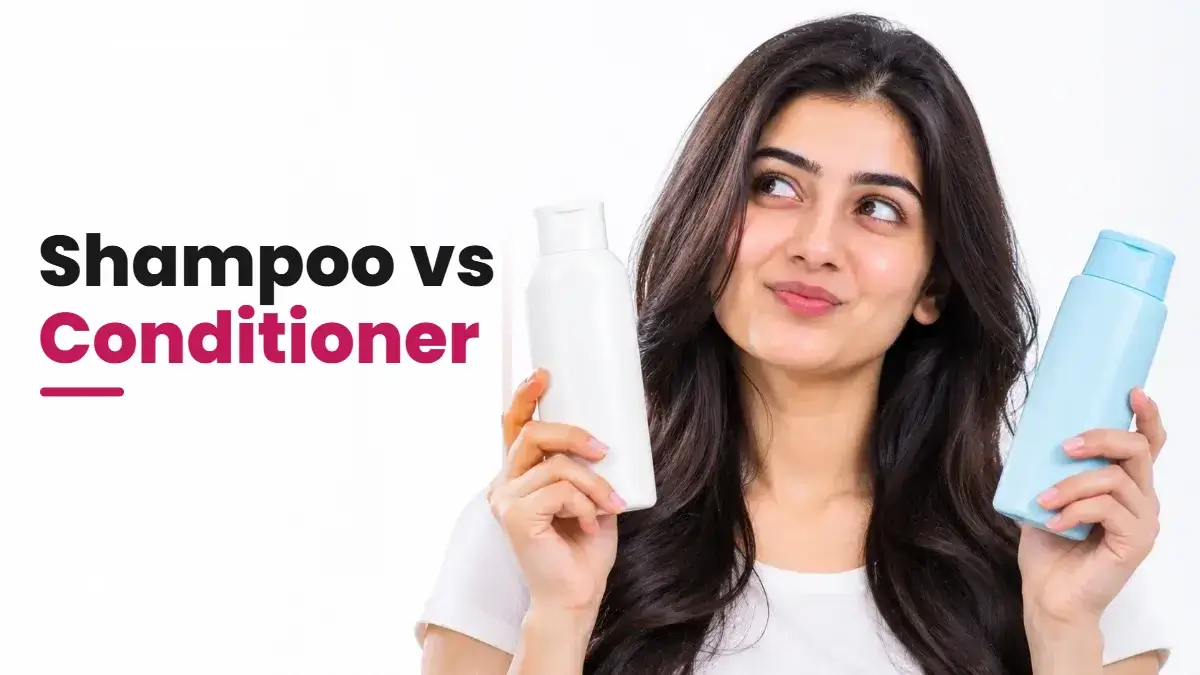
Shampoo cleanses your scalp and hair by removing oil, dirt, sweat, and product buildup, while conditioner works after shampoo to smoothen the hair cuticle, add moisture, and reduce frizz. The difference between shampoo and conditioner comes down to their job: one cleans, the other nourishes, and your hair needs both to stay healthy.
This guide explains how shampoo and conditioner actually work on your hair, the correct order and technique to apply each one, and common mistakes Indian readers make that lead to dry, frizzy, or flat-looking hair.
What Is Shampoo and How Does It Work?
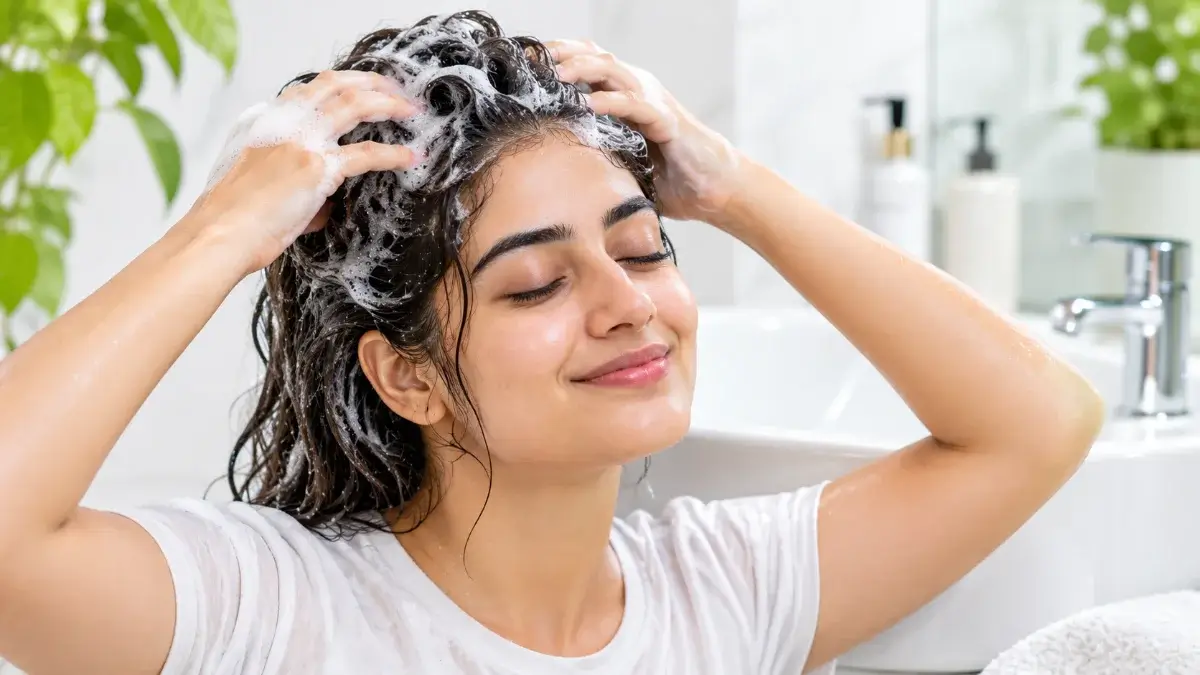
Shampoo is a cleansing product made with surfactants (cleansing agents) that bind to oil and dirt on the scalp and hair, allowing water to rinse them away. It is mainly meant to clean the scalp, not condition the hair strands.
Hair fibre has a natural pH of around 3.67, and a shampoo’s pH should stay close to this level because shampoos must not have a pH higher than 5.5, which is also the scalp’s natural pH. A shampoo with a higher pH than this can irritate the scalp and make hair rough over time.
Signs You Need to Shampoo
- Scalp feels oily, itchy, or has visible flakes
- Hair looks flat, dull, or smells of sweat
- There is visible product or dust buildup after a day outdoors
What Is Conditioner and How Does It Work?
Conditioner is applied after shampoo to restore the moisture and smoothness that washing can strip away. Hair conditioner adds moisture back into cleansed hair and can help prevent breakage, coating strands with nourishing, softening ingredients to smooth the hair cuticle, leading to less frizz and a smoother appearance.
Conditioners are usually made of a blend of moisturizing ingredients, such as natural oils like argan, coconut, and jojoba, botanical extracts, and proteins like keratin, along with conditioning agents like silicones to help smooth the hair and eliminate tangles. This is why conditioner feels thicker and creamier than shampoo.
Difference Between Shampoo and Conditioner
Here is a simple side-by-side comparison to understand the difference between shampoo and conditioner at a glance.
| Point | Shampoo | Conditioner |
|---|---|---|
| Main job | Cleanses scalp and hair of oil, dirt, and buildup | Moisturises and smoothens hair strands |
| Texture | Thin, lathers with water | Thick and creamy |
| Where to apply | Scalp and roots | Mid-lengths and ends, not the scalp |
| Key ingredients | Surfactants/detergents | Oils, silicones, proteins, humectants |
| Frequency | 2–3 times a week for most hair types | Every time you shampoo |
| Can you skip it? | Not recommended for long gaps; oil and dirt build up | Skipping often leads to dry, tangled, frizzy hair |
How to Use Shampoo the Right Way
- Wet your hair thoroughly with lukewarm water, not very hot water, as hot water can dry out the scalp.
- Take a coin-sized amount of shampoo and dilute it slightly in your palm with a little water.
- Apply it mainly to the scalp and gently massage with fingertips, not nails, for about a minute.
- Let the lather flow down the lengths naturally while rinsing; you don’t need to scrub the ends separately.
- Rinse thoroughly until the water runs clear, with no slippery or foamy residue left.
How to Use Conditioner the Right Way
- Gently squeeze out excess water from hair after shampooing so the hair is damp, not dripping.
- Take a small amount of conditioner and rub it between your palms.
- Apply it from the mid-lengths to the ends, avoiding the scalp to prevent greasiness.
- Use a wide-tooth comb to gently detangle while the conditioner is still on.
- Leave it on for 2–3 minutes, then rinse with cool or room-temperature water to help seal the hair cuticle.

Can You Use Conditioner Without Shampoo?
Yes, this method is called co-washing, where hair is cleansed using only conditioner instead of shampoo. Co-washing is a technique where hair is gently cleansed with conditioner instead of shampoo. It works best for very dry, curly, or textured hair that doesn’t produce much oil, but it isn’t enough on its own if your scalp is oily, sweaty, or has product buildup. If you have curly or coily hair, you can read more about how to care for curly and coily hair types to understand which washing method suits your texture best.
Common Mistakes to Avoid
- Applying conditioner on the scalp: This can make roots look oily and flat, especially in humid Indian weather.
- Skipping conditioner after every wash: Damage to the hair shaft can occur if the wrong kind of shampoo is consistently applied, especially if no conditioners are applied for protection and restoration.
- Using very hot water: It strips natural oils and opens the cuticle too much, making hair prone to frizz.
- Not rinsing shampoo properly: Leftover residue can weigh hair down and irritate the scalp.
- Using too much conditioner: This can leave fine hair limp and greasy by the next day.
Choosing Shampoo and Conditioner for Your Hair Type
- Oily scalp: Use a gentle, clarifying shampoo more often, and apply conditioner only to the ends. If oiliness returns quickly, check these natural ways to manage an oily scalp.
- Dry or frizzy hair: Choose a moisturising conditioner and avoid shampooing daily, as it can worsen dryness.
- Colour-treated hair: Use a sulphate-free shampoo and a conditioner that focuses on cuticle smoothing to retain colour and shine.
- Hair fall-prone hair: A mild shampoo and regular conditioning reduce breakage from tangling. For a complete routine, see these hair care tips to control hair fall.
If you’re dealing with ongoing hair thinning along with your wash routine, it also helps to look into immediate steps such as those covered in how to stop hair fall at home for men and women, and consider nourishing additions like rosemary oil for hair growth as part of your pre-wash care.
Who Should Be Careful
People with a sensitive or eczema-prone scalp should patch test any new shampoo or conditioner on a small area of skin behind the ear before full use, and stop immediately if itching, redness, or burning occurs. A patch test lowers risk but does not guarantee zero reaction, so always check the ingredient list if you have known allergies. Anyone with persistent scalp irritation, unusual hair fall, or dandruff that doesn’t improve with regular washing should consult a dermatologist rather than self-treating with multiple products.
Conclusion
The real difference between shampoo and conditioner is simple: shampoo cleans your scalp, and conditioner cares for your hair strands. Using both correctly, shampoo on the scalp and conditioner on the lengths, in the right order, gives you cleaner, softer, and more manageable hair without overdoing either product. If hair problems persist despite a good routine, see a dermatologist for personalised advice.
Frequently Asked Questions
Q. Should I apply conditioner before or after shampoo?
Conditioner should generally be applied after shampoo, once the hair is clean, so it can properly smoothen and moisturise the strands without getting washed away by cleansing agents.
Q. Can I skip conditioner if my hair is oily?
You can use a very small amount only on the ends, since even oily hair tends to have drier, more damage-prone tips compared to the scalp.
Q. How often should I shampoo and condition my hair?
Most people can shampoo 2–3 times a week depending on scalp oiliness and climate, while conditioner can be used every time you shampoo since it doesn’t strip natural oils.
Q. Why does my hair feel rough after shampoo but soft after conditioner?
Shampoo temporarily opens the hair cuticle while cleaning, which can feel rough, while conditioner closes and smoothens the cuticle, giving hair its soft, shiny feel.
Q. Is it bad to use conditioner on the scalp daily?
Applying conditioner directly on the scalp regularly can clog pores and make roots look greasy, so it’s best kept to the mid-lengths and ends only.