Henna (Lawsonia inermis) does not make hair grow faster, but it conditions the scalp, strengthens the hair shaft and reduces breakage, which creates a healthier environment for existing hair to grow and look fuller. Used the right way, henna for hair growth works best as a conditioning and strengthening treatment rather than a miracle hair-growth cure.
This guide covers how henna actually affects hair, the correct way to mix and apply it, three simple henna hair packs you can make at home, and the precautions every Indian reader should know before using it.
Does Henna Really Help Hair Growth?
Henna coats each strand and deposits a pigment called lawsone, which binds with the hair protein (keratin) to strengthen each strand while adding a natural reddish tint. This coating effect is what makes hair feel thicker and look shinier.
There is no strong clinical evidence that henna speeds up new hair growth in humans. No robust clinical study shows that henna speeds up hair growth; Ayurvedic tradition regards it as a scalp treatment, and its coating effect can create an impression of extra volume. A small animal study did find that henna was capable of promoting new hair growth in the dorsal skin lesions of mice, producing the most pronounced effect on hair density among the tested drugs, but animal results cannot be directly applied to human scalps.
What henna reliably does is improve scalp and hair condition: it helps control dandruff, balances scalp pH, reduces split ends, and pure henna from Lawsonia inermis does not damage hair when used correctly. Healthier hair with less breakage simply looks like it is “growing” faster, even though the growth rate at the follicle hasn’t changed.
If you are dealing with visible hair fall rather than just dullness, it helps to first understand the underlying cause through our guide on how to stop hair fall immediately at home.
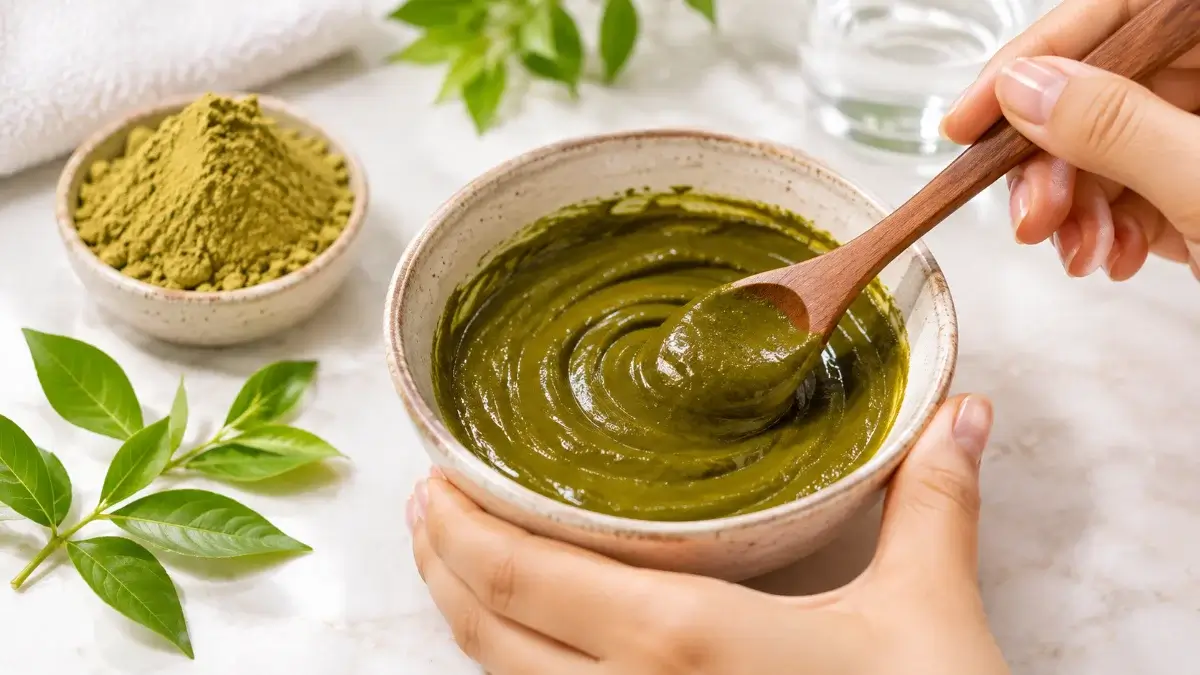
How to Apply Henna for Hair Growth the Right Way
Follow these steps for an even application and better results:
- Choose pure henna: Buy plain, 100% natural henna powder with no added chemicals. Avoid products labelled “black henna” (see precautions below).
- Mix the paste: Combine henna powder with plain water, brewed tea, or amla water to form a smooth, lump-free paste. Use a glass, plastic, or iron bowl, not metal, as metal can react with the dye.
- Let it rest: Cover and leave the paste for 6-8 hours or overnight at room temperature so the dye releases properly.
- Section your hair: Divide clean, dry hair into 4-6 sections so you don’t miss any patch.
- Apply with gloves: Starting from the roots, apply the paste along the length of each section using a brush or gloved hands. Apply a little coconut or olive oil along the hairline and ears to avoid staining the skin.
- Cover and wait: Tie hair into a bun and cover with a shower cap. Leave the henna on for 1-2 hours; avoid letting it dry out completely on the hair.
- Rinse thoroughly: Wash out with plain water first. Skip shampoo on the same day so the colour and conditioning benefits settle in properly.
Use henna once every 3-4 weeks. Applying it too often can make hair feel dry or rough over time, especially if your hair is already low in moisture.
3 Henna Hair Packs for Hair Growth and Strength
These packs combine henna with other traditional ingredients to add extra conditioning, shine, or scalp care.
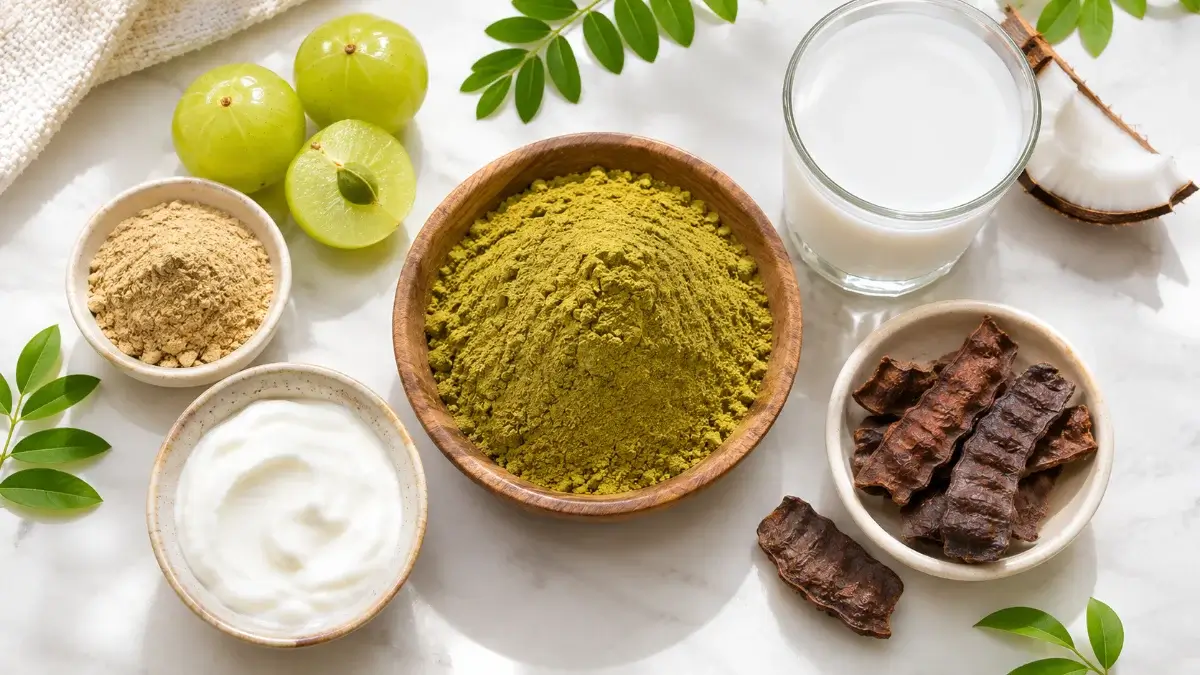
1. Henna, Amla and Fenugreek Pack (for strength and shine)
- 3 tablespoons henna powder
- 1 cup amla powder
- 2 tablespoons fenugreek (methi) powder
- Water, as needed
Mix all three powders with a little water to make a smooth paste and let it rest for a few hours. Amla and fenugreek are traditionally used to support scalp health and reduce dryness. Apply from roots to tips, leave on for 1-2 hours, then rinse. You can read more about how fenugreek and other home remedies help with shedding in our article on hair care tips to control hair fall.
2. Henna, Curd and Shikakai Pack (for conditioning and cleansing)
- 2 tablespoons henna powder
- 1 tablespoon shikakai powder
- 2-3 tablespoons plain curd
Mix the henna and shikakai powders with curd to a smooth, thick consistency and let it sit for a couple of hours. Shikakai is a gentle, traditional cleanser that works well alongside henna’s conditioning effect. Apply evenly, leave for about an hour, then rinse with a mild shampoo. For more shikakai-based recipes, see our guide on shikakai powder for hair growth and shikakai benefits for hair.
3. Henna and Coconut Milk Pack (for dry or rough hair)
- 10 tablespoons henna powder
- 1 cup warm coconut milk
Warm the coconut milk slightly and mix in the henna powder to form a paste. Let it rest for a few hours before applying from roots to ends. Coconut milk adds extra moisture, which helps balance henna’s naturally drying effect on very dry or frizzy hair. Leave on for about an hour, then wash off.
Who Should Avoid Henna or Be Careful With It
- People with coloured or chemically treated hair: Henna can alter the tone of dyed or bleached hair unpredictably, so test on a small section first.
- Anyone planning to use chemical hair dye soon after: It is best to wait a few weeks between henna and permanent hair colour.
- Children, especially those with G6PD deficiency: Research shows that in children with glucose-6-phosphate dehydrogenase deficiency, topical application of henna may cause life-threatening haemolysis, so parents should check with a doctor before using henna on young children.
- Anyone with very dry, chemically treated, or brittle hair: Henna can add further dryness; follow up with a light oil massage or deep conditioner.
- People with known plant allergies or sensitive skin: Always do a patch test before full application.
Never Use Black Henna – Here’s Why
“Black henna” is not the same as natural henna. It is often mixed with a chemical called para-phenylenediamine (PPD) to give a darker, faster colour, and this is where most reported henna-related skin reactions come from. Black henna tattoo reaction is a form of allergic contact dermatitis to PPD, while natural pure henna does not cause allergic reactions in most people.
PPD concentrations in black henna products can be dangerously high. One study found that a henna paste with a 10% PPD concentration caused reactions in everyone who tested it, and FDA testing of black henna products found PPD concentrations ranging from 4% to 27%. Once sensitised to PPD, you can also react to regular chemical hair dyes later, so it’s safer to stick to plain, pure henna. You can read more about this on the DermNet NZ page on black henna tattoo reactions.
Always patch test any henna product, even “pure” ones, on your inner arm 24 hours before applying it to your scalp or hair. A clear patch test does not guarantee there will never be a reaction later, so stop use immediately and rinse off if you notice itching, redness, or burning.
Henna vs. Other Hair Growth Ingredients
Henna works mainly as a conditioning and coating treatment, not a follicle stimulant. If your main goal is to actually encourage new hair growth at the root, you may want to pair henna with ingredients that have more direct evidence for scalp circulation, such as rosemary oil. Our detailed guide on rosemary oil for hair growth and how to use it the right way explains how to use it safely alongside your regular hair care routine.
If greying hair alongside thinning is your concern, henna’s reddish-brown tint can also double up as a natural way to cover a few greys; read our article on how to stop white hair naturally for more options.
Conclusion
Henna for hair growth works best as a conditioning and strengthening treatment that improves scalp health, reduces breakage, and adds natural thickness and shine, not as a direct cure for hair loss. Stick to pure, chemical-free henna, patch test before every use, and pair it with a balanced hair care routine for the best results. If hair fall or thinning continues despite home care, consult a dermatologist.
Frequently Asked Questions
Q. Can henna actually regrow hair on bald patches?
No reliable human studies show that henna regrows hair on bald or balding patches. It can improve scalp condition and strengthen existing strands, but persistent bald patches need a dermatologist’s evaluation.
Q. How often should I apply henna for hair growth?
Once every 3-4 weeks is generally enough. Applying it more often can dry out the hair, especially if you don’t follow up with oiling or conditioning.
Q. Can I use henna if I have coloured or chemically treated hair?
Yes, but test it on a small hidden section first, since henna can change the tone of chemically coloured hair unpredictably, sometimes giving unwanted orange or red undertones.
Q. Is it safe to use henna during pregnancy?
Plain, pure henna applied to hair is generally considered low-risk for most people, but avoid black henna completely and check ingredient labels carefully. If you have any doubts, ask your gynaecologist before use.
Q. Why does my hair feel dry or rough after henna?
Henna has a natural drying effect because it coats the hair shaft. Follow up with a hair oil massage or a deep-conditioning mask, such as a coconut milk or curd-based pack, within a day or two of using henna.